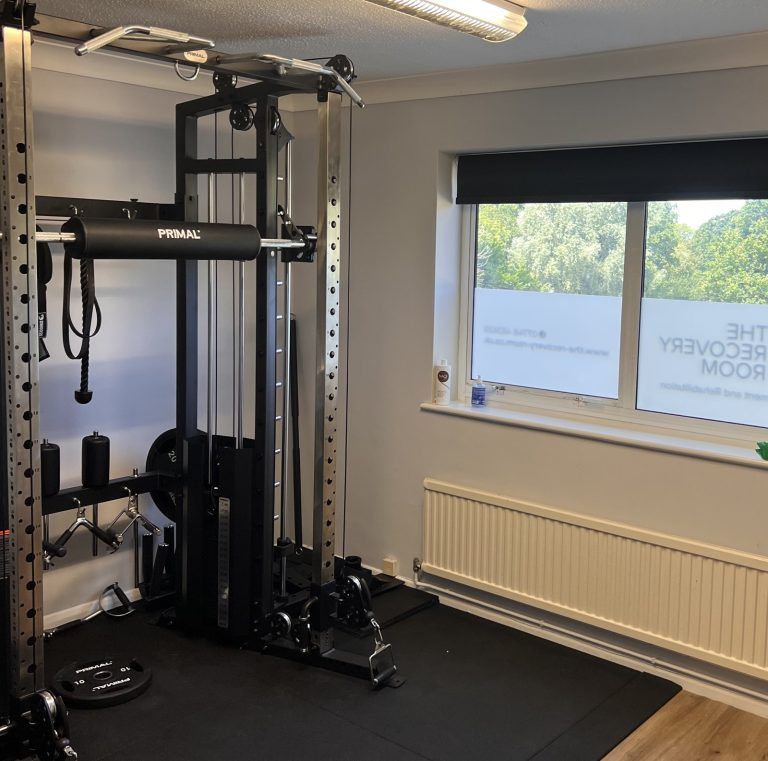

If your elbow aches after hitting balls or your back stiffens before the end of a round, notice where in the round it starts. At The Recovery Room, we use those details to help you decide what you can keep doing and what needs more work. Our Southampton clinic is based at Romsey Golf Club.
Is it the swing, the walk or the amount you play?
A wrist that hurts after catching the ground, an elbow that aches after repeated shots and a back that stiffens on the walk all give us different starting points. Tell us whether the pain began suddenly or built across several rounds, and how you feel later that day and the next morning.
What can you change before your next round?
Treatment and rehabilitation
For a gradual problem, take a look at what has changed. Have you added a range session, played consecutive rounds or started carrying the bag? Where symptoms are mild and activity is appropriate, a shorter outing or less range work may be easier to manage. If a sudden injury leaves you in severe pain or unable to use the area normally, seek medical advice before testing another swing.
What will we look at?
We ask about your golf, your health history and other activities, then check the movements relevant to your symptoms. We may talk through the swing or carrying the bag when it helps explain the demands on the sore area. We’ll agree practical activity changes and exercises around the part of golf you want to regain.
How do you build back towards a full round?
Choose an achievable milestone, such as a comfortable range visit or walking a shorter course. See how you feel during the session and later. Build from there in steps you can repeat, with the plan adjusted if symptoms keep flaring.
Arrange an assessment
Build a round from its separate demands
Picture your usual course. A session at the range can involve many swings in a short time, while a round adds walking, slopes, awkward lies and carrying equipment. Discuss which part of golf you want back first. Someone may be able to putt and chip comfortably but struggle to walk the back nine. Another person may manage the walk yet have trouble hitting a series of fuller shots.
| Part of golf | Demand to describe | Review point |
|---|---|---|
| Putting and short shots | Time standing, bending and the number of short swings | How the task feels as you repeat it and later the same day |
| Range practice | Club, swing effort, surface and rest between shots | Which part of the swing or repetition makes a difference |
| Walking holes | Terrain, course length and whether you push or carry equipment | How walking feels near the end and the next morning |
| Playing a round | Combined walking and swings, plus pressure to keep up | Which demands you have practised together and where you can finish early |
Use a scorecard for the first visit back
Before the visit: agree a starting activity after assessment. Write the club, number of shots or walking time and the reason you chose it. Arrange a way to finish early that suits the course and terrain. Tell playing partners about your plan so you do not have to decide while you are on the course.
During the visit: notice whether you change your grip, stance or stride to get through the activity. Stop if symptoms are building or control changes. Record what you did, including any extra walking to and from the practice area.
The next day: compare a familiar activity, such as getting out of a chair or using stairs. Take that information to review before adding more swings, more holes or a heavier bag.
For example, you might manage a few short shots and still find it difficult to walk back to the clubhouse with equipment. If walking is the limiting part, ask about a shorter route or getting help with the bag while you build what you need. If the issue is repeated swings, bring the club, surface and number of shots to the appointment. A coach can help you describe a change in technique alongside the clinician’s assessment of symptoms and function.
To compare visits, keep one of the two main demands familiar. If you are changing club and working towards a longer swing, avoid also adding a longer walk on the same visit without discussing that plan. If a competition is close, ask how your current milestones fit the actual course rather than judging readiness by the date.
Frequently asked questions
Is the driving range always easier than a round?
⌄
⌄
Should I change clubs or equipment while I recover?
⌄
⌄
When should I seek advice before playing again?
⌄
⌄
Book a golf injury assessment
If pain is changing how you swing, walk or enjoy the game, book an assessment with us at Romsey Golf Club. Tell us when it starts in a round and what you’d like to get back to.
Book a golf injury assessmentFurther reading
NHS advice after a sprain or strain