

A back-pain flare-up: planning a return to everyday activity
Plan manageable everyday activity during a back-pain flare-up and recognise when medical help is needed.


A practical guide to shockwave assessment and treatment at our Southampton clinic: what to tell us, what happens during a session and how the next steps are agreed.
Your symptoms are only part of the picture. Your history, previous treatment and goals help guide the discussion.
Find the clinic and plan your visit →The exact plan depends on your assessment. Treatment proceeds only if it is suitable and you agree.

Your clinician reviews the problem and relevant medical information, examines the area and explains the findings and options.
Discuss expected benefits, uncertainty, risks and alternatives. Ask about the proposed sessions and costs before consenting.
A handheld applicator delivers pressure waves through the skin to the agreed area. Tell your clinician how it feels; you can ask to pause or stop.
Shockwave can be uncomfortable or painful. Temporary soreness, redness, swelling or bruising can occur afterwards. Less common complications include tissue injury; ask your clinician about the risks relevant to you.
Ask for clear guidance on activity, rehabilitation and follow-up for your condition. Any restrictions or aftercare should be personalised by your clinician.
Learn about exercise rehabilitation →Discuss work, exercise and sport, including what to adjust and when to review it.
Agree what you will monitor and when the plan should be reassessed. Further sessions are not a guarantee of improvement.
Ask what symptoms to expect and when to seek advice. Contact the clinic if you have concerns about your treatment.
If you have not been assessed for this problem or are unsure which appointment to choose, contact the clinic or book an assessment. Do not assume shockwave will be suitable before that discussion.
Choose clothing that allows comfortable access to the area you want assessed. Call the clinic if you have questions about privacy, access or what to bring.
Check the appointment details when booking and confirm with the clinic if unclear. An assessment includes discussion and examination, not just the time the applicator is used.
Discuss the proposed number, spacing, total costs and review points after assessment. The plan should reflect your condition and response; there is no fixed course that suits everyone.
Ask your clinician for advice specific to your condition, activity and treatment. Confirm any restrictions before returning to training or sport.
View the online booking options. For changes, check your confirmation instructions or call 07748 483639 for help.
General treatment information: Royal Orthopaedic Hospital ESWT patient guide. For benefits and evidence, see our shockwave therapy overview.
Visit The Recovery Room at Romsey Golf Club, Romsey Road, Southampton, SO16 0XW. Talk through your condition and decide on the next step with your clinician.
View appointment options →Prefer to speak first? Call 07748 483639
Plan manageable everyday activity during a back-pain flare-up and recognise when medical help is needed.

Understand what to discuss at an assessment for shoulder pain during reaching and lifting.

A practical guide to ankle-sprain recovery, staged goals and when to seek medical help.

Unsure when to run after a soleus injury? We explain the main decisions and how The Recovery Room can help you plan a suitable return.

Questions to ask about musculoskeletal imaging, what a scan might change and how results are interpreted.
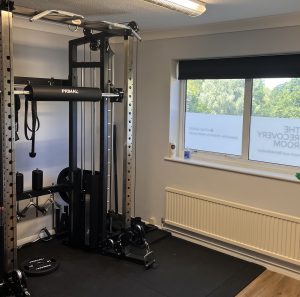
Find out how assessment, suitable exercises and treatment can fit together for calf pain, with practical support from The Recovery Room.

Prepare a staged return to tennis that considers serving, movement, practice and review.

Deep calf pain without an obvious injury? Learn when to seek medical help and when routine assessment at The Recovery Room may be appropriate.

Ask about the purpose, application and skin checks when considering sports tape or a support.
Understand the difference between soleus and gastrocnemius pain, without guessing the diagnosis. Find out how a calf assessment can help.