
Everyday muscle tension
Talk about areas that feel tense or uncomfortable and how they affect your work or daily activities.


Discuss muscle tension, aches or the demands of your activity with our team. Your session is guided by your needs, with techniques and pressure agreed with you. You do not need to be an athlete.

Sports massage uses hands-on soft-tissue techniques. People seek it for different reasons, from muscle tension associated with everyday routines to the demands of exercise. Your clinician discusses whether massage is appropriate rather than assuming every ache needs the same approach.
Talk about areas that feel tense or uncomfortable and how they affect your work or daily activities.
Discuss your activity levels, recent training and what you would like from a massage session.
If you are unsure what is causing pain, ask about an assessment rather than choosing massage as a diagnosis.
Explore sports therapy →Explain what you want help with, and ask questions before treatment begins.

Talk through relevant medical history, symptoms, activity levels and any previous response to treatment.
Your clinician discusses the areas to work on, positioning and approach. Treatment proceeds with your agreement.
Tell your clinician how the pressure feels. Afterwards, discuss your response and whether follow-up or another approach would be useful.
Sports massage does not need to be as painful as you can tolerate. Ask for lighter pressure, a different position, a pause or a stop whenever you need it.
Ask the clinic before your visit →Discuss medicines, bleeding or bruising problems, recent surgery or injury, skin conditions and other relevant health information before treatment. The clinician can advise on precautions and suitability.
Temporary soreness can occur. Report pain or concerns, and ask what to expect after your particular session.
Response varies, and any relief may be temporary. Massage is not a guarantee of injury prevention, faster recovery or improved sporting performance. An assessment can help you consider the options for your circumstances.
Meet your clinicians →Trigger point techniques →
Focused pressure that may be used within hands-on care.
Exercise rehabilitation →
Guided movement, strength and progression.
Compare clinic services →
Help finding a suitable starting point.
No. The clinic welcomes people at all activity levels. Discuss your needs so the clinician can consider whether massage is appropriate.
Wear comfortable clothing that allows access to the area you would like treated. Ask about positioning, covering and privacy arrangements if you have concerns before your visit.
No. Tell your clinician if the pressure is uncomfortable or painful. You can ask for the approach to change or for treatment to stop.
If you have a new or unexplained problem, or are unsure what you need, contact the clinic for help choosing. Massage should not delay appropriate medical assessment.
Check the online appointment options for the current session details. Contact the clinic to clarify duration, price and appointment type before booking.
There is no single schedule for everyone. Discuss your goals, response and any proposed follow-up with the clinician rather than assuming you need an ongoing course.
Check directly with your insurer and the clinic before booking. Cover and practitioner requirements vary, and reimbursement is not guaranteed.
The Recovery Room is at Romsey Golf Club, Romsey Road, Southampton, SO16 0XW. We welcome people from Southampton, Romsey, Totton and the New Forest. Find directions and contact details →
Further reading: NCCIH information on massage therapy, evidence and safety.
View sports massage appointments at our Southampton clinic, or call if you would like help choosing the right appointment.
Book a sports massage →Questions first? Call 07748 483639
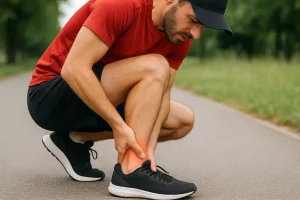
A practical guide to ankle-sprain recovery, staged goals and when to seek medical help.

Unsure when to run after a soleus injury? We explain the main decisions and how The Recovery Room can help you plan a suitable return.

Questions to ask about musculoskeletal imaging, what a scan might change and how results are interpreted.
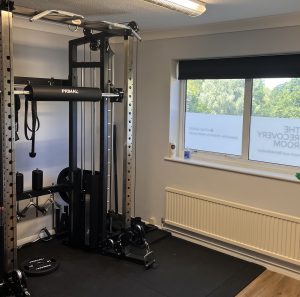
Find out how assessment, suitable exercises and treatment can fit together for calf pain, with practical support from The Recovery Room.

Prepare a staged return to tennis that considers serving, movement, practice and review.

Deep calf pain without an obvious injury? Learn when to seek medical help and when routine assessment at The Recovery Room may be appropriate.

Ask about the purpose, application and skin checks when considering sports tape or a support.
Understand the difference between soleus and gastrocnemius pain, without guessing the diagnosis. Find out how a calf assessment can help.

Understand how warming up and stretching differ and how to prepare for your activity.

Wondering how long a soleus strain takes to recover? We explain useful milestones and how The Recovery Room can help you make a manageable plan.