


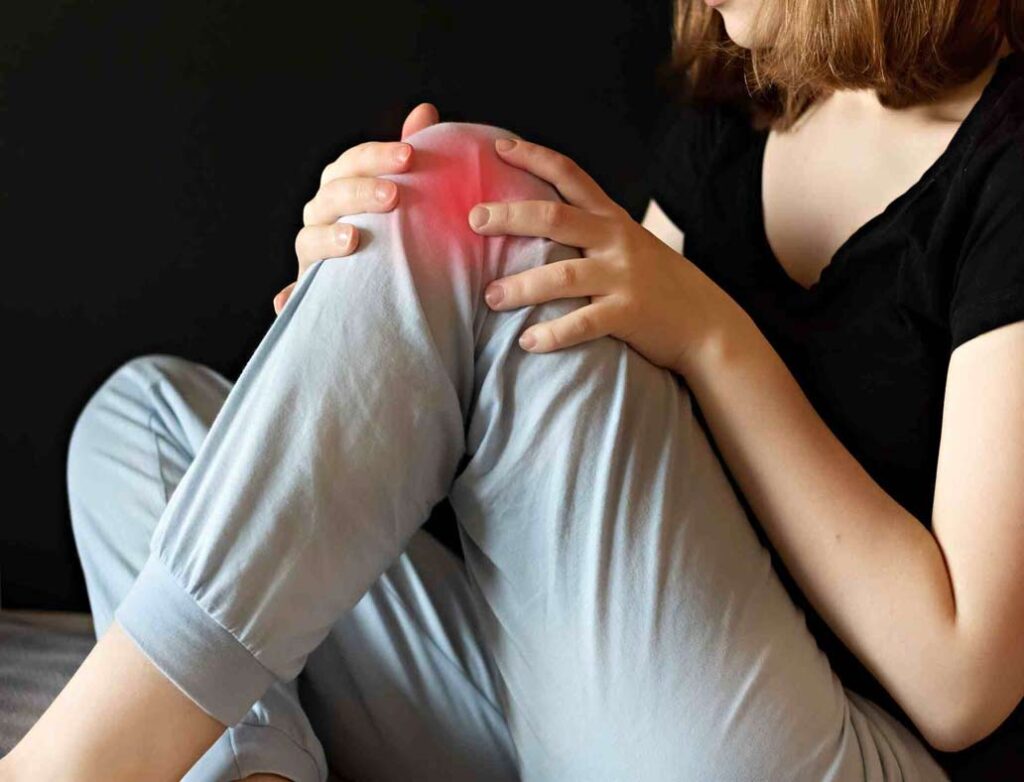
Kneecap pain doesn’t have to end your training block. With the right diagnosis, targeted strength work, and a smart return plan, most runners get back to comfortable, confident miles. At The Recovery Room (Southampton & Romsey), we help runners resolve patellofemoral pain syndrome (PFPS) by fixing the cause—not just soothing the symptoms.
What Is Runner’s Knee (PFPS)?
PFPS is pain felt around or behind the kneecap, especially with stairs, squats, hills, or after sitting. It’s often an issue of load tolerance at the patellofemoral joint rather than damage on a scan.
Common Signs
- Aching around/behind the kneecap with running, stairs, or squats
- Worse on downhills or after prolonged sitting (“theatre sign”)
- Tender borders of the patella; occasional crepitus (grinding) without swelling
Why Runners Get PFPS
- Training spikes: sudden jumps in mileage, hills, or speed
- Strength deficits: hips (glute med/ER) and quads (esp. VMO) under-loaded
- Gait factors: overstriding, low cadence, narrow step width, hip drop
- Terrain & footwear: frequent downhills; worn or abrupt shoe changes
- Recovery & stress: poor sleep, high stress, low energy availability
The fix: manage load now, then build capacity where you’re lacking—hips, quads, and control.
First 72 Hours: What To Do
- Modify, don’t stop: swap hills/downhills for flat routes; reduce volume/pace
- Avoid deep knee flexion (very deep squats, full-depth lunges) initially
- Use pain as your guide: aim for ≤ 2/10 during and settled within 24 hours
- Isometric quads or wall sits for short-term pain relief
- Ice/heat and OTC analgesia if helpful (follow pharmacist/GP advice)
Our Runner-Focused Approach
1) Assessment
- Training review (volume, intensity, hills, shoes)
- Strength tests: hips and quads, single-leg control, step-down mechanics
- Gait analysis: cadence, stride, step width, trunk posture
- Clear diagnosis and staged plan with weekly actions
2) Treatment & Rehab
- Targeted strength: hip abductors/external rotators + quadriceps (closed-chain first)
- Gait tweaks: +5–7% cadence, slightly wider step width, small forward lean
- Taping: short-term patellar taping to reduce pain and enable training
- Foot orthoses: temporary support if it clearly reduces pain during loading
- Manual therapy: soft-tissue and joint techniques as adjuncts to
- exercise
Home Exercise Progression (Guide)
Progress only if pain ≤ 2/10 during and symptoms settle within 24 hours.
- Isometric quads / wall sit: 5 × 30–45s, daily
- Sit-to-stand (box height pain-free): 3–4 × 8–12, 3×/week
- Step-downs (small step → higher): 3 × 8–10 each side, 3×/week
- Hip strength: side-steps with band + clamshells, 3 × 12–15, 3×/week
- Spanish squat (band behind knees): 3 × 8–10 slow reps, 2–3×/week
- Single-leg RDL: 3 × 8–10 each side, 2–3×/week
Return-to-Running Plan (Example)
Start when: you can perform step-downs and 30–45s wall sits with ≤ 2/10 pain and walk briskly 30 mins pain-free.
- Week 1: Flat route only — Walk 4 min / Run 1 min × 6 (3 sessions)
- Week 2: Walk 3 / Run 2 × 6
- Week 3: Walk 2 / Run 3 × 6
- Week 4: Continuous easy run 20–30 min (no downhills/speed)
- Week 5: Add gentle strides; keep strength 2×/week
- Week 6+: Reintroduce hills or tempo—one variable at a time
We’ll tailor cadence cues, step width, and progressions to your gait and goals.
Prevention & Long-Term Care
- Strength work 2×/week (hips + quads) during training blocks
- Cadence and step-width checks in faster sessions and downhills
- Gradual load increases (≈10% average); schedule deload weeks
- Rotate shoes; replace at 500–800 km depending on wear
- Prioritise sleep, protein, and overall energy intake
Book Your PFPS Assessment
Initial assessment and treatment from £49. Clinics in Southampton & Romsey, including early and evening appointments.
- Call: 07748 483639
- Email: enquiries@the-recovery-room.co.uk
- Online bookings: the-recovery-room.co.uk
FAQs
How long does runner’s knee take to improve?
⌄
⌄
Do I need an MRI?
⌄
⌄
Can I keep running?
⌄
⌄
What exercises help most?
⌄
⌄
Should I use a brace or tape?
⌄
⌄