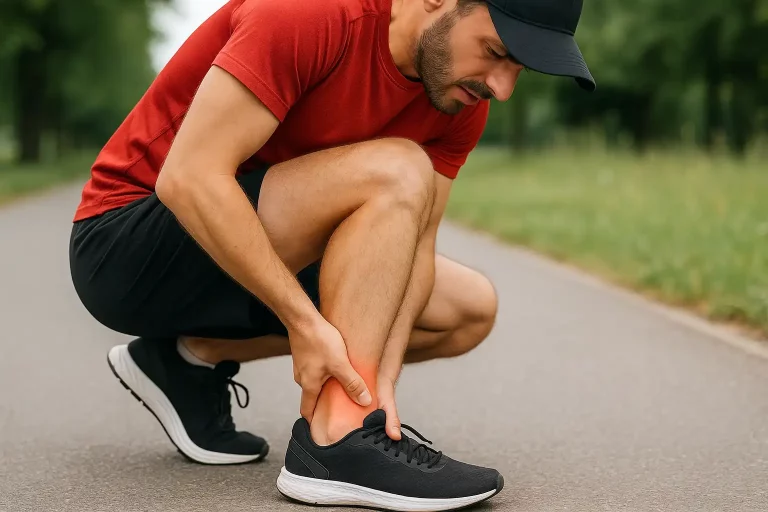

A soleus muscle strain is an injury involving the deeper calf muscle, but an ache in that region cannot confirm a strain. Assessment considers how symptoms began, what you can do, examination findings and whether another cause needs investigation. A clinician may use imaging when it answers a relevant question; a scan is not automatically the first or only step.
This guide explains the assessment process rather than offering a home diagnosis. It is useful preparation if you have been told that a soleus strain is possible or you are unsure what a calf assessment involves.
Key takeaways
- Symptoms can suggest questions to investigate without establishing a diagnosis.
- Describe the onset and changes in function rather than assigning yourself an injury grade.
- Different calf tasks provide information in context; one painful exercise is not a definitive test.
- Ask what a proposed investigation could change about your care.
When to seek urgent medical help
Unexplained one-sided calf pain with swelling, warmth or skin colour changes can indicate DVT. Seek an urgent GP appointment or NHS 111 advice if a clot is suspected. Calf symptoms with chest pain or breathlessness require 999 or A&E; do not drive yourself. Do not arrange a routine calf assessment instead of urgent care. Read the NHS DVT guidance.
Sudden severe pain, a major loss of function or a snap followed by difficulty pushing off also warrants prompt medical assessment. Tell the service what happened rather than labelling the event a muscle pull.
What the word strain does and does not tell you
“Strain” describes a muscle injury. It does not by itself specify its extent, the structures involved or the demands you can safely resume. If that word appears in a report, ask what it means for your particular situation.
People often search for grade 1, 2 or 3 symptoms before an appointment. The problem is that pain intensity, bruising and the ability to walk do not provide a reliable home grading system. Different assessment and imaging classifications also exist. Use the terminology your clinician explains, rather than matching yourself to a recovery table online.
Start with a clear history
Write down when you first noticed the problem, what you were doing and what changed immediately. Include whether you stopped, whether walking changed and what happened later. If there was no clear event, say so.
A useful account might be: “I noticed a deep ache after my usual walk on Monday. On Tuesday stairs were uncomfortable. I have not tested running.” This is a fictional example of useful reporting, not a typical soleus presentation. It avoids adding an unverified explanation such as scar tissue or weakness.
Previous injuries, health conditions, medicines and recent circumstances may affect the assessment. Share them even if they do not seem connected to sport. You should not need to repeat the activity that triggered pain just to make the history more convincing.
What might the examination explore?
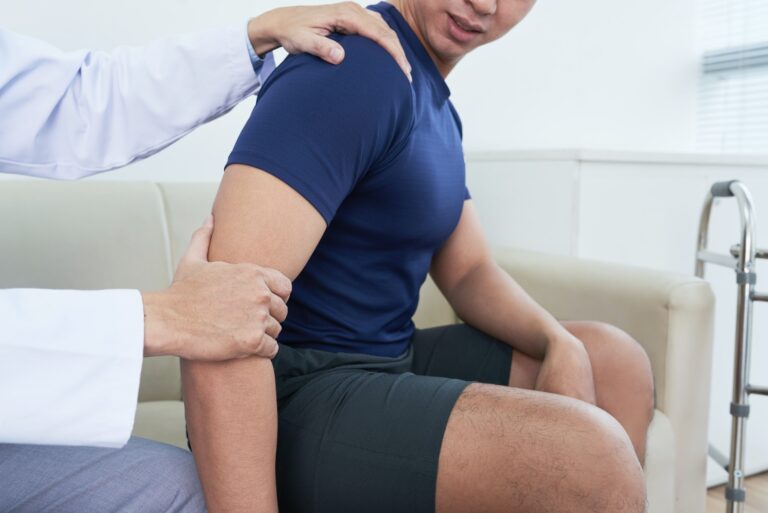
The assessor chooses an examination based on your presentation and its safety. That can include observing walking, checking movement, examining the painful region and considering calf capacity. Some tasks may involve different knee positions. They are pieces of information, not independent verdicts.
For example, discomfort during a bent-knee calf task may prompt further questions. It does not establish that other structures are uninvolved. Our muscle-comparison guide explains why anatomical distinctions do not translate into a simple self-test.
When can imaging help?
The 2025 soleus narrative review and case report highlights diagnostic difficulties, including the limitations of imaging deep structures. Its single patient and proposed protocol should not be treated as a prescription for every injury.
Useful questions before a scan include: what are we trying to identify; why is this imaging method appropriate; and would a different result change the plan? If findings do not explain persistent symptoms, ask what should happen next. Do not interpret a normal scan as permission to resume any activity regardless of symptoms.
Leave with a working plan
At the end of assessment, ask for an explanation in ordinary language. What is the current diagnosis or working explanation? What uncertainty remains? Which activities are reasonable now? What should trigger medical advice or a review?
Write down the review point as well as the first action. “Review after trying the agreed daily activity” is more informative than leaving with several unrelated exercises and no way of judging the response.
For the next conversation, see treatment selection and recovery expectations. The main soleus pain guide connects the wider cluster.
Frequently asked questions
Can a strain occur without a sudden pull?
⌄
⌄
Can I diagnose it using a bent-knee calf raise?
⌄
⌄
Does persistent pain always mean a larger tear?
⌄
⌄
Why might a scan not be recommended?
⌄
⌄
Leave the assessment knowing what to do before your next review
A working diagnosis should help you make decisions while your clinician checks how the symptoms develop. Ask what the findings suggest, what else might need checking and which activities are appropriate now. For example, a person who felt a sudden calf pain while pushing off and now struggles to walk will need a different starting discussion from someone whose discomfort developed gradually over several runs.
| Decision | What to bring | What to agree |
|---|---|---|
| What needs checking first? | When symptoms started, any change in swelling or walking, and whether there was a sudden injury | Whether medical assessment, investigation or routine rehabilitation is appropriate |
| Which activity can I continue? | A task you need for work, travel or home | A manageable version and what response should prompt you to stop |
| What would change the plan? | How your symptoms and function have changed since the first assessment | When to review, which milestone to check and who to contact if you get worse |
- Follow the advice on urgent symptoms above before considering exercise.
- After assessment, write down the activity you have agreed and what you should temporarily reduce or leave out.
- Keep a brief record of walking or other agreed activity, including any change in movement and how the following day feels.
- Bring the record to review. Ask whether you should repeat the current amount, progress a specific demand or reassess the original explanation.
If a scan is discussed, ask what question it would answer and how each likely result would affect the next step. This is especially useful if a work deadline or return to sport is approaching. Green and colleagues’ study of calf strain assessment and rehabilitation
Arrange routine assessment
For symptoms that do not need urgent medical care, The Recovery Room's injury assessment service can help you discuss the problem and suitable next steps.
References
- NHS: DVT
- Problems in diagnosis and treatment of soleus muscle injuries, 2025
- Calf injuries: an anatomy-based approach, 2026
The previous version was clinically reviewed by James Kirkpatrick, MSc Sports Therapy, on 29 October 2026.