
A soleus stretch is usually described as a calf stretch performed with the knee bent and the heel supported on the ground. It differs from the familiar straight-knee position, but stretching is not a way to diagnose deep calf pain or a complete treatment for a muscle injury. If you have a recent strain or unexplained symptoms, establish whether stretching is appropriate before trying to make the calf feel looser.
This guide explains the position, common errors and questions about suitability. It does not prescribe stretching for an unassessed injury.
Key takeaways
- Bending the knee changes a calf stretch; it does not prove which structure is painful.
- A stretch should not be forced through sharp or increasing pain.
- Recent injury, unexplained swelling or new symptoms change the next step.
- Mobility practice and rehabilitation loading serve different purposes.
When to seek urgent medical help
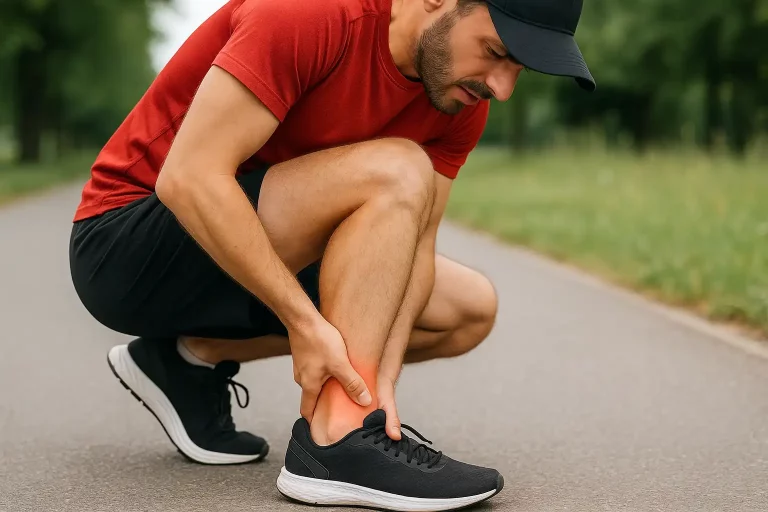
Do not stretch unexplained calf pain to check whether it is muscular. One-sided pain with swelling, warmth or skin colour change can indicate DVT and needs urgent GP or NHS 111 assessment if suspected. Calf symptoms accompanied by chest pain or breathlessness require 999 or A&E. Do not drive yourself. See the NHS DVT guidance.
What changes when the knee bends?
The gastrocnemius crosses the knee as well as the ankle; the soleus does not cross the knee. Bending the knee changes the position of the calf complex, which is why both straight- and bent-knee stretches are commonly described. Neither position provides complete isolation or a diagnosis.
The Royal Orthopaedic Hospital's calf-stretching instructions illustrate these two positions. A general patient leaflet does not establish that its stretching schedule is appropriate for your injury.
A supported position, when stretching is appropriate
If you have been advised to use a wall stretch, choose a stable surface and enough room to stand comfortably. Position the leg being stretched behind you, with its foot pointing forwards. Keep the heel grounded, bend that knee gently and move only until you reach the comfortable stretch position agreed with your clinician.
Keep the movement slow. Do not bounce or force the heel down to chase a stronger sensation. If the position feels sharp, makes the pain increase or causes an unexpected symptom, stop and seek advice rather than increasing the effort.
Ask about the hold duration, repetitions and frequency suitable for you. Copying the longest hold or most frequent schedule you can find is not a useful way to individualise the exercise.
Three common errors to discuss
- The heel lifts: you may have moved beyond the position you can control. Reduce the movement and check the setup rather than forcing the heel down.
- The knee straightens: the task is changing. Ask someone qualified to check the intended position if the distinction is unclear.
- The stretch becomes a pain test: repeated attempts to find exactly where it hurts can aggravate symptoms and still cannot identify a diagnosis.
A useful photograph for your own appointment shows the whole setup, including the support, knee and foot. A close-up of the ankle alone may hide what you want the clinician to check. You do not need to recreate a painful position to obtain it.
Why a recent injury needs a different conversation
A calf that feels tight is not necessarily asking to be stretched. After an injury, forcing movement can be inappropriate. The Hull NHS calf-strain leaflet advises against pushing into pain during its recovery exercises.
Ask whether the current aim is comfortable movement, protection from further aggravation or a selected exercise programme. If no one has established the cause of the symptoms, do not use a temporary change in sensation after stretching as confirmation that the problem is minor.
When strengthening may matter more
A stretch and a heel raise are different activities. The stretch position does not show that the calf can cope with the work you want to resume. If your goal involves walking, lifting, running or jumping, discuss how the plan addresses that activity rather than measuring progress only by stretch depth.
Our soleus exercise guide explains questions about loading. The treatment guide helps distinguish the purpose of different interventions, while the main guide explains assessment.
A simple record for review
Record the stretch variation you were advised to use, whether you understood the position and what happened afterwards. Include any change in ordinary walking. “The heel kept lifting, so I stopped and want the position checked” is more actionable than “the stretch does not work”.
If your symptoms change substantially, bring that to the clinician's attention rather than waiting for a routine exercise review. The programme may need reconsidering.
Frequently asked questions
Why bend the knee?
⌄
⌄
Should a soleus stretch hurt?
⌄
⌄
Should I stretch immediately after a calf strain?
⌄
⌄
Is stretching enough to return to running?
⌄
⌄
Check whether the stretch helps with the task you chose
Give the stretch a purpose before adding it to your routine. You might want to move your ankle more comfortably while going downstairs or while doing an exercise your clinician has shown you. If your difficulty is pushing off repeatedly during a walk, the assessment may point to rebuilding strength or endurance. These are different goals and call for different ways to measure progress.
| What you notice | What to record | What to discuss next |
|---|---|---|
| An agreed stretch produces a mild pull and settles afterwards | How the chosen task feels during your normal day | Whether to keep the stretch in your programme and when to review it |
| Movement feels easy at first but walking becomes difficult with repetition | Distance or time before that change and how stairs feel later | Whether graded strengthening or an activity adjustment better fits the goal |
| New sharp pain, weakness or unexplained swelling | When it began and any other symptoms | Stop stretching and seek appropriate assessment using the urgent advice above |
- Confirm that stretching is suitable for your current symptoms, especially after injury or surgery. Follow your treating team’s instructions.
- Agree what the stretch is for and use the position and amount you have been shown. If you feel sharp pain or worsening symptoms, stop.
- Keep a brief record of the response and how the chosen everyday task feels afterwards. Use a task you already do within your agreed limits.
- Review the record before increasing the stretch. If the same activity remains difficult, ask whether to change the exercise or reassess the calf.
If the calf feels looser immediately but your normal walk is still limited at the same point, bring both observations to your next appointment. That gives your clinician a reason to look at the demands of the walk and how you tolerate them. Royal Orthopaedic Hospital calf stretching instructions
Get advice on an appropriate programme
For non-urgent problems, explore exercise rehabilitation at The Recovery Room to discuss whether mobility work, strengthening or another approach suits your goals.
References
The previous version was clinically reviewed by James Kirkpatrick, MSc Sports Therapy, on 29 October 2026.